
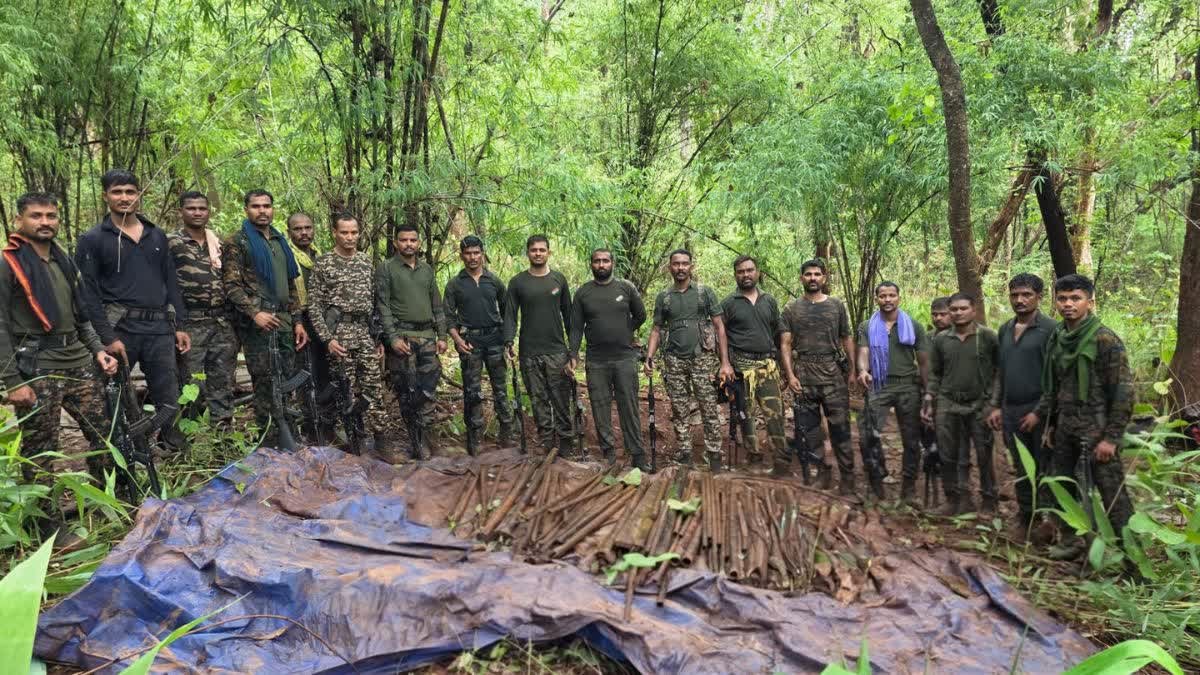
For decades, the forested districts of Chatra and Latehar have been among the most sensitive regions affected by Left-Wing Extremism (LWE) in Jharkhand. Their dense forests, difficult terrain, and strategic location connecting Jharkhand with Bihar and Chhattisgarh made them long-standing operational zones for Maoist groups and splinter outfits.
Today, however, the security landscape is undergoing a significant transformation.
Through sustained anti-extremism operations, intelligence-led policing, improved coordination between the Jharkhand Police and Central Armed Police Forces (CAPFs), and an increasing emphasis on development, authorities have intensified efforts to restore peace and strengthen governance in the region. The Union Government has also reiterated its goal of eliminating Left-Wing Extremism nationwide through a combination of security operations, rehabilitation, and infrastructure development.
A Region Long Associated with Left-Wing Extremism
The Chatra–Latehar belt has historically witnessed the presence of Maoist groups due to its rugged forests and limited connectivity. Over the years, several armed organizations operated in these districts, including the CPI (Maoist) and regional splinter groups such as the Tritiya Prastuti Committee (TPC), which has historically been active in Chatra, Latehar, and Palamu.
For years, these groups influenced remote villages through extortion, attacks on infrastructure, and occasional confrontations with security forces. Road construction, mining activities, and public infrastructure projects were often delayed because of security concerns.
Intensified Security Operations
In recent years, security agencies have shifted from reactive policing to proactive intelligence-based operations.
Joint teams comprising:
- Jharkhand Police
- CRPF
- CoBRA battalions
- Jharkhand Jaguar
- District Armed Police
regularly conduct:
- Area domination exercises
- Search-and-cordon operations
- Long-range jungle patrols
- IED detection missions
- Intelligence-based raids
- Surveillance of suspected extremist movement
These operations are particularly concentrated in forest corridors connecting Chatra, Latehar, Palamu, Lohardaga, Gumla, and adjoining districts.
Officials say continuous pressure has reduced the operational freedom of extremist groups and disrupted their logistics networks.
Focus on Intelligence Rather Than Large-Scale Encounters
Modern counter-insurgency operations increasingly rely on actionable intelligence rather than broad search missions.
Police now use:
- Human intelligence networks
- Technical surveillance
- Drone reconnaissance in selected areas
- Mobile communication analysis
- Inter-agency intelligence sharing
This allows security agencies to identify movement routes, temporary camps, and supply chains with greater precision while minimizing disruption to civilian life.
Development as a Security Strategy
Security officials increasingly emphasize that lasting peace depends not only on policing but also on development.
Several initiatives have focused on:
- Expanding road connectivity
- Electrification of remote villages
- Mobile network coverage
- Healthcare facilities
- Residential schools
- Drinking water projects
- Banking access
- Employment schemes
Improved infrastructure enables faster emergency response, easier movement of security personnel, and better delivery of government services.
Impact on Local Communities
Many villages that once witnessed frequent security operations now report improved connectivity and greater access to government welfare schemes.
Better roads have facilitated:
- Agricultural transport
- School attendance
- Ambulance services
- Market access
- Public transportation
Residents in several areas have also benefited from increased police outreach programs aimed at building trust between communities and law enforcement.
Rehabilitation and Surrender Policies
Apart from security action, authorities continue to encourage militants to surrender through rehabilitation programs.
Such initiatives generally include:
- Financial assistance
- Skill development
- Vocational training
- Housing support
- Employment opportunities
- Reintegration into society
Officials view rehabilitation as an important complement to enforcement, particularly for lower-rung cadres seeking to leave extremist organizations.
Interesting Reads
Bihar and Jharkhand Set to End 25-Year Sone River Water Dispute with Historic Agreement
Technology is Changing Counter-Insurgency Operations
Unlike previous decades, modern security operations rely heavily on advanced technology alongside conventional policing.
Security forces now employ:
- Drone surveillance over dense forest areas.
- GPS-enabled navigation during jungle patrols.
- Satellite imagery for terrain analysis.
- Digital communication monitoring.
- Bomb detection and disposal equipment.
- Modern mine-protected vehicles for troop movement.
- High-resolution thermal imaging devices during night operations.
These technological advancements have significantly reduced operational risks while improving the efficiency of intelligence gathering.
Officials believe that technology will continue playing an increasingly important role as security agencies modernize their counter-insurgency capabilities.
Infrastructure Projects Gain Momentum
Improved security conditions have allowed several infrastructure projects to progress more smoothly.
Priority sectors include:
- National highways
- Rural roads
- Railway connectivity
- Power transmission
- Irrigation projects
- Mining logistics
- Telecommunications
Infrastructure development is expected to strengthen the regional economy while reducing the isolation that historically contributed to extremist influence.
Economic Development Linked to Improved Security
One of the most significant outcomes of sustained anti-extremism operations in the Chatra–Latehar region has been the gradual improvement in the local economy. Security experts often point out that development and security go hand in hand. Areas once considered inaccessible due to extremist activities are now witnessing increased government investment in roads, schools, healthcare centres, and public infrastructure.
The improved law and order situation has also encouraged contractors to resume delayed infrastructure projects that were previously hampered by security concerns. Road connectivity under schemes such as the Pradhan Mantri Gram Sadak Yojana (PMGSY) has improved access to remote villages, helping farmers transport produce to markets while allowing students and patients easier access to schools and hospitals.
Mining activities, which form a crucial part of Jharkhand’s economy, have also benefited from enhanced security. Coal transportation, industrial logistics, and mineral exploration have become more efficient as security agencies continue to safeguard key transport corridors.
Ongoing Challenges
Despite improvements, authorities acknowledge that challenges remain.
These include:
- Difficult forest terrain
- Hidden IED threats
- Small extremist cells
- Recruitment attempts in vulnerable areas
- Cross-district movement through forest corridors
Security agencies therefore continue regular patrols and intelligence gathering to prevent regrouping by extremist elements.
Government’s Long-Term Vision
The Ministry of Home Affairs has repeatedly stated its objective of eliminating Left-Wing Extremism through a multi-pronged strategy combining security operations, infrastructure development, rehabilitation policies, and stronger coordination between central and state agencies.
For Jharkhand, this strategy places continued emphasis on sensitive districts including Chatra and Latehar, where both security operations and development projects are expected to continue.
Why Chatra and Latehar Matter
The strategic importance of these districts extends beyond Jharkhand.
They form part of an important forest corridor connecting multiple states historically affected by Left-Wing Extremism. Maintaining security in this belt supports:
- Interstate transportation
- Mining operations
- Rural development
- Tourism potential
- Investment confidence
- Public service delivery
Improved law and order also creates opportunities for economic activity that can generate employment and reduce conditions that extremist groups have historically exploited.
Looking Ahead
The changing security situation in the Chatra–Latehar region reflects a broader shift in India’s approach to combating Left-Wing Extremism. Rather than relying solely on armed operations, authorities are combining intelligence-driven policing with development initiatives, rehabilitation programs, and infrastructure expansion.
While isolated security challenges persist, the sustained focus on governance, connectivity, and community engagement has begun to reshape one of Jharkhand’s most sensitive regions. Continued coordination between security forces, civil administration, and local communities will remain essential to ensuring that peace translates into long-term social and economic development.
