
By Koylanchal Tourism Desk
When people think of dinosaur discoveries and prehistoric landscapes, countries like the United States, Argentina, Mongolia, and China often come to mind. Few realize that India also holds remarkable evidence of life from the age of dinosaurs. Hidden in the northeastern corner of Jharkhand lies the Rajmahal Hills—a geological treasure where ancient volcanoes once erupted, prehistoric forests flourished, and fossils dating back between 68 and 145 million years continue to reveal secrets of Earth’s distant past.
Despite its immense scientific importance, breathtaking landscapes, and rich tribal heritage, the Rajmahal Hills remain one of India’s most underrated travel destinations. The region offers visitors an extraordinary opportunity to explore millions of years of natural history while experiencing the untouched beauty of forests, rolling hills, tribal villages, and the mighty Ganga River.
For travelers, history enthusiasts, geology students, and nature lovers alike, Rajmahal Hills represent a journey through time unlike any other in India.
Where Are the Rajmahal Hills?
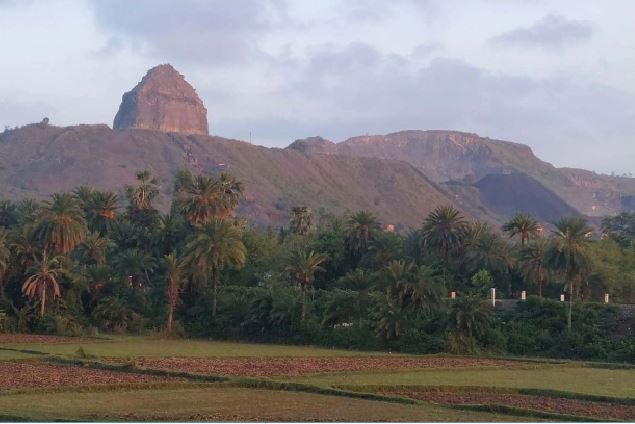
The Rajmahal Hills are located in Sahibganj district of northeastern Jharkhand, extending toward the borders of West Bengal. Stretching across the region, these hills form an important geological formation known worldwide for their volcanic origin and fossil-rich deposits.
Unlike the towering Himalayan ranges, the Rajmahal Hills possess a unique charm. Their moderate elevation, dense forests, winding roads, and panoramic views create an atmosphere of serenity that has remained largely untouched by mass tourism.
The hills overlook sections of the Ganga River, adding to the scenic beauty of the region and making it one of Jharkhand’s hidden natural wonders.
A Journey Back to the Age of Dinosaurs
To truly appreciate Rajmahal Hills, one must travel back millions of years in imagination.
Long before humans appeared on Earth, before continents reached their present positions, and before the Himalayas rose from tectonic collisions, this region experienced intense volcanic activity.
During the Jurassic and Early Cretaceous periods, massive lava flows covered large portions of the landscape. These volcanic eruptions created thick layers of basalt rock known today as the Rajmahal Traps.
These ancient lava formations not only transformed the geography but also preserved invaluable records of prehistoric ecosystems beneath volcanic deposits. Over millions of years, sediments trapped plant remains and organic material, creating one of India’s richest fossil-bearing regions.
Scientists believe that during this era, dinosaurs roamed landscapes covered with lush vegetation, rivers, swamps, and dense forests very different from today’s environment.
The Rajmahal Traps: A Geological Wonder
The Rajmahal Traps are among India’s most significant volcanic formations.
Formed approximately 118–120 million years ago, these basaltic lava flows represent one of the country’s major episodes of volcanic activity. Layers upon layers of solidified lava now make up much of the hill range visible today.
For geologists, the Rajmahal Traps offer crucial insights into:
- Ancient volcanic processes
- Continental drift
- Plate tectonics
- Climate evolution
- Earth’s geological history
Researchers studying these rocks have contributed significantly to global understanding of how Earth’s continents evolved during the breakup of the ancient supercontinent Gondwana.
Fossil Park at Mandro: Jharkhand’s Window into Prehistory
Among the region’s biggest attractions is Fossil Park at Mandro, located in Sahibganj district.
The park protects numerous fossil sites where ancient plant remains have been discovered over several decades.
Visitors walking through Fossil Park are not simply looking at rocks—they are observing remnants of ecosystems that existed when dinosaurs dominated Earth.
The preserved fossils include:
- Ancient tree trunks
- Fossilized leaves
- Plant impressions
- Seed structures
- Wood fossils
- Prehistoric vegetation
These discoveries provide scientists with valuable information about plant evolution, prehistoric biodiversity, and environmental conditions that existed millions of years ago.
The park has become an important destination for students, researchers, and geology enthusiasts from across India.
Fossils That Changed Scientific Understanding
The Rajmahal fossil discoveries have attracted international scientific attention.
Researchers estimate many of the fossils preserved in the region date back between 68 and 145 million years, covering portions of the Jurassic and Cretaceous periods.
Scientists from institutions including the Birbal Sahni Institute of Palaeobotany have conducted extensive studies on the area’s fossil record.
The discoveries have helped researchers understand:
- Ancient forest ecosystems
- Climate changes during the dinosaur era
- Evolution of prehistoric plants
- Continental vegetation patterns
- Biodiversity before flowering plants became dominant
Unlike dinosaur skeletons that capture public imagination elsewhere, Rajmahal’s strength lies in its extraordinary preservation of prehistoric plant life.
These botanical fossils provide equally important evidence for reconstructing Earth’s ancient environments.
Did Dinosaurs Really Live Here?
One of the most fascinating questions visitors ask is whether dinosaurs actually lived in the Rajmahal region.
Although the Rajmahal Hills are primarily famous for fossilized plant remains rather than dinosaur skeletons, scientists agree that the ancient ecosystems represented by these fossils existed during the age of dinosaurs.
The forests whose remains are preserved here would have formed part of the habitat supporting prehistoric wildlife across the Indian subcontinent.
Therefore, while dinosaur fossils themselves are rare in Rajmahal, the region preserves valuable evidence of the environment in which dinosaurs once lived.
More Than a Fossil Destination
Rajmahal Hills offer much more than geological history.
Nature lovers discover:
Dense Forests
Large sections remain covered by natural forests supporting diverse wildlife and bird species.
Scenic Hill Ranges
Rolling hills create spectacular viewpoints, especially during sunrise and sunset.
The Ganga River
Several locations offer panoramic views of India’s longest river flowing past the hills.
Waterfalls
Seasonal waterfalls emerge during the monsoon, adding to the region’s natural beauty.
Forest Trails
Nature walks through quiet forest paths provide opportunities for photography and wildlife observation.
A Living Cultural Landscape
The Rajmahal Hills are also home to vibrant tribal communities who have lived here for centuries.
Their lifestyles remain deeply connected to forests, agriculture, rivers, and traditional customs.
Visitors often encounter:
- Traditional mud houses
- Indigenous farming practices
- Tribal festivals
- Folk music
- Local handicrafts
- Indigenous cuisine
These communities preserve unique languages, oral traditions, and ecological knowledge that have been passed down through generations.
Unlike commercial tourist destinations, Rajmahal offers genuine cultural experiences rooted in everyday village life.
Interesting Reads
The Rajmahal Hills are located in the Santhal Pargana division of Jharkhand
Maluti: The Forgotten Temple Kingdom of Jharkhand Where Kings Built 108 Temples Instead of Palaces
Rajmahal During the Monsoon
Although beautiful throughout the year, Rajmahal transforms dramatically during the monsoon season.
Rainfall blankets the hills in lush greenery.
Mist rises from the valleys.
Waterfalls begin flowing.
Streams become active.
Cloud-covered peaks create breathtaking scenery.
Photography enthusiasts often describe the region as resembling the Western Ghats or northeastern India during this season.
Government Efforts to Preserve Rajmahal’s Heritage
Recognizing the area’s geological significance, the Government of Jharkhand has undertaken several initiatives to protect and promote Rajmahal Hills.
Among the key developments are:
- Establishment of Fossil Park at Mandro
- Protection of fossil-bearing sites
- Educational tourism initiatives
- Geological awareness programs
- Improved visitor infrastructure
- Conservation planning
Schools and universities increasingly organize educational tours to the region, helping younger generations understand India’s prehistoric heritage.
Challenges Facing Rajmahal Hills
Despite growing recognition, Rajmahal continues to face several conservation challenges.
Mining Activities
Mining remains one of the biggest concerns, as it can damage fossil-bearing rock formations if not carefully regulated.
Lack of Awareness
Many Indians remain unaware of Rajmahal’s scientific importance.
Limited Tourism Infrastructure
Compared to major destinations, accommodation, interpretation centres, and visitor facilities remain limited.
Fossil Protection
Illegal collection and accidental damage threaten some fossil sites.
Experts continue advocating stronger legal protection and greater public awareness to preserve this unique geological landscape.
Educational Importance
Rajmahal Hills serve as an outdoor classroom for students across multiple disciplines.
Educational institutions visit the region to study:
- Geology
- Paleontology
- Geography
- Environmental science
- Archaeology
- Ecology
Field visits provide hands-on learning experiences rarely available inside classrooms.
Students gain firsthand understanding of volcanic rocks, fossil preservation, and Earth’s geological evolution.
Places to Explore Around Rajmahal
Visitors exploring the region can combine several attractions into a single trip.
Fossil Park, Mandro
The primary attraction featuring prehistoric plant fossils.
Rajmahal Hill Viewpoints
Excellent panoramic locations for photography.
Ganga River Landscapes
Beautiful riverfront scenery near Sahibganj.
Tribal Villages
Ideal for cultural tourism and learning local traditions.
Forest Trails
Perfect for eco-tourism and birdwatching.
Best Time to Visit
The ideal months to explore Rajmahal Hills are:
October to March
Pleasant weather for sightseeing and trekking.
July to September
Perfect for lush green landscapes, waterfalls, and monsoon photography.
Summer months can become relatively hot, although early mornings remain suitable for exploration.
How to Reach Rajmahal Hills
By Air
The nearest airports include:
- Deoghar Airport
- Bagdogra Airport
- Kolkata Airport (for longer-distance travelers)
By Rail
Sahibganj Railway Station offers convenient rail connectivity.
By Road
Rajmahal is well connected by highways linking Sahibganj, Dumka, Pakur, and neighboring districts.
Private vehicles provide the most flexibility for exploring the hill region.
Why Rajmahal Remains One of India’s Best-Kept Secrets
India boasts famous heritage sites, mountain stations, wildlife sanctuaries, and archaeological monuments.
Yet very few places combine:
- Dinosaur-era history
- Ancient volcanic landscapes
- Fossil discoveries
- Tribal culture
- Forest tourism
- Scenic river views
- Educational value
Rajmahal Hills offer all these experiences in one destination.
Unlike crowded tourist hotspots, visitors here enjoy peaceful exploration while connecting with millions of years of Earth’s history.
Fascinating Facts About Rajmahal Hills
- Fossils discovered here are estimated to be between 68 and 145 million years old.
- The Rajmahal Hills were formed through massive volcanic eruptions during the Jurassic and Early Cretaceous periods.
- Fossil Park at Mandro is one of India’s most important paleobotanical sites.
- Scientists from the Birbal Sahni Institute of Palaeobotany have conducted extensive research in the region.
- The hills preserve evidence of prehistoric forests that existed during the age of dinosaurs.
- The region is home to indigenous tribal communities with rich cultural traditions.
- Monsoon transforms the hills into one of Jharkhand’s most scenic landscapes.
- Rajmahal remains one of India’s least explored geological tourism destinations.
Conclusion
The Rajmahal Hills are far more than a collection of ancient rocks. They are a living archive of Earth’s prehistoric past, preserving evidence from a time when dinosaurs ruled the planet and volcanic eruptions reshaped continents.
From the fossil-rich landscapes of Mandro to the mist-covered hill ranges overlooking the Ganga, Rajmahal offers an unforgettable blend of science, history, nature, and culture. It is a destination where every rock tells a story millions of years old, every fossil reveals clues about vanished ecosystems, and every trail leads visitors deeper into one of India’s greatest hidden treasures.
As India increasingly embraces geotourism and heritage conservation, the Rajmahal Hills deserve recognition alongside the country’s most celebrated natural wonders. For those willing to venture beyond the usual tourist routes, this forgotten land in Jharkhand promises an experience unlike any other—a journey back to the age when dinosaurs walked the Earth and nature wrote the first chapters of our planet’s incredible story.
