
In today’s rapidly evolving workplace, leadership is no longer defined solely by authority, technical expertise, or years of experience. Organizations now recognize that the ability to communicate effectively has become one of the most valuable leadership competencies. Whether leading a multinational corporation, managing a government department, running a startup, or coordinating a remote workforce, communication is the foundation that determines how successfully leaders inspire, influence, and achieve results.
The modern workplace has transformed dramatically over the last few years. Hybrid work models, digital collaboration tools, artificial intelligence, multicultural teams, and geographically dispersed employees have changed the way leaders interact with their workforce. In this environment, communication is not simply about conveying information—it is about building trust, fostering collaboration, resolving conflicts, motivating employees, and creating a shared vision for success.
Research consistently shows that organizations with effective communication practices enjoy higher employee engagement, increased productivity, lower turnover rates, and stronger financial performance. Employees who clearly understand organizational goals and feel heard by their leaders are more likely to remain committed, innovative, and productive.
This article explores why communication skills are indispensable for leadership in 2026, the benefits they bring to organizations, practical ways to develop these skills, and how future leaders can adapt to changing workplace expectations.
Why Communication Skills Matter in Leadership
Communication is the bridge between a leader’s vision and a team’s execution. Every strategic decision, organizational change, performance review, project update, or motivational speech depends on effective communication.
Leaders who communicate well create clarity. Instead of leaving employees confused about priorities or expectations, they ensure everyone understands organizational objectives and their role in achieving them.
Poor communication, on the other hand, often results in misunderstandings, duplicated work, low morale, reduced productivity, and workplace conflicts.
In 2026, communication has become even more important because organizations are managing:
- Hybrid workforces
- Remote employees across different time zones
- Cross-functional project teams
- AI-assisted workflows
- Diverse and multicultural workplaces
- Continuous organizational transformation
Without excellent communication, even the best business strategy can fail during implementation.
Leadership Is More Than Giving Instructions
Traditional leadership often emphasized giving orders and expecting compliance.
Modern leadership focuses on:
- Listening actively
- Encouraging collaboration
- Inspiring innovation
- Supporting employee growth
- Building trust
- Solving problems together
Today’s employees expect leaders to explain the “why” behind decisions rather than simply issuing commands.
They value transparency, empathy, and open dialogue.
Communication therefore becomes a two-way process rather than a one-way flow of information.
The Importance of Communication in Modern Organizations
Creating a Shared Vision
Successful organizations operate around a common purpose.
Leaders must clearly communicate:
- Company mission
- Long-term objectives
- Business priorities
- Departmental goals
- Individual responsibilities
When employees understand how their work contributes to organizational success, they become more engaged and motivated.
Building Trust
Trust is earned through honest, consistent, and transparent communication.
Employees trust leaders who:
- Keep promises
- Share important information
- Admit mistakes
- Provide honest feedback
- Listen carefully
- Respect differing opinions
Organizations with high trust levels experience stronger teamwork and lower employee turnover.
Managing Organizational Change
Businesses today experience constant change:
- Digital transformation
- AI adoption
- Policy updates
- Market disruptions
- Economic uncertainty
- Organizational restructuring
Employees naturally resist uncertainty.
Strong communication helps leaders:
- Explain why change is necessary
- Address employee concerns
- Reduce anxiety
- Build confidence
- Encourage adaptability
Without proper communication, even beneficial changes may face resistance.
Benefits of Strong Communication Skills for Leaders
1. Improved Team Morale
Employees who receive regular communication feel valued and respected.
Clear guidance removes confusion while recognition boosts motivation.
Leaders who celebrate achievements and appreciate employee contributions create positive workplace cultures where people genuinely enjoy working.
Higher morale leads to:
- Better collaboration
- Increased motivation
- Lower absenteeism
- Greater job satisfaction
2. Increased Productivity
Productivity improves when employees clearly understand:
- Their responsibilities
- Project expectations
- Deadlines
- Performance standards
Effective communication reduces time wasted on clarification and unnecessary corrections.
Instead of guessing priorities, employees focus directly on meaningful work.
3. Better Decision-Making
Communication enables leaders to gather information from multiple perspectives.
Encouraging employee input often leads to:
- Better solutions
- Faster problem-solving
- More innovative ideas
- Reduced operational risks
Great leaders understand that listening is just as valuable as speaking.
4. Stronger Collaboration
Modern organizations rely heavily on teamwork.
Effective communication encourages:
- Knowledge sharing
- Cross-department coordination
- Conflict resolution
- Collective innovation
Employees become more willing to help one another when communication channels remain open.
5. Greater Workplace Transparency
Transparency creates confidence throughout an organization.
Employees appreciate leaders who openly communicate:
- Company performance
- Business challenges
- Future plans
- Career opportunities
- Organizational changes
Transparency reduces workplace rumors while strengthening employee confidence.
6. Higher Employee Engagement
Employees want more than salaries.
They want:
- Recognition
- Feedback
- Career development
- Meaningful conversations
- Opportunities to contribute
Leaders who communicate regularly keep employees emotionally connected to organizational goals.
Engaged employees consistently outperform disengaged teams.
7. Better Conflict Resolution
Disagreements are inevitable in every workplace.
Effective communication allows leaders to:
- Understand different viewpoints
- Clarify misunderstandings
- Address concerns fairly
- Restore professional relationships
Ignoring communication often allows conflicts to escalate.
8. Enhanced Customer Experience
Leadership communication extends beyond internal teams.
Employees who receive clear guidance deliver:
- Better customer service
- Faster response times
- Consistent brand messaging
Satisfied employees usually create satisfied customers.
Interesting Reads
Essential Communication Skills Every Leader Needs
Active Listening
Communication begins with listening.
Effective leaders:
- Pay complete attention
- Avoid interruptions
- Ask thoughtful questions
- Confirm understanding
- Respect differing opinions
Employees appreciate leaders who genuinely listen instead of waiting for their turn to speak.
Emotional Intelligence
Communication becomes more effective when leaders understand emotions.
Emotionally intelligent leaders recognize:
- Employee concerns
- Workplace stress
- Team morale
- Individual motivations
Empathy allows communication to become more meaningful and supportive.
Clarity
Simple communication prevents confusion.
Leaders should:
- Use clear language
- Avoid unnecessary jargon
- Organize ideas logically
- Focus on key messages
Clear communication saves time and improves execution.
Confidence
Confident communication inspires confidence in others.
This includes:
- Calm voice
- Positive body language
- Professional presentation
- Decisive messaging
Confidence should never become arrogance.
Adaptability
Every employee communicates differently.
Some prefer:
- Detailed explanations
- Visual presentations
- Brief summaries
- Face-to-face meetings
- Written documentation
Great leaders adjust their communication style according to the audience.
Communication Challenges Leaders Face in 2026
Technology has created new opportunities while introducing fresh communication challenges.
Hybrid Work
Remote employees may feel disconnected.
Leaders must intentionally communicate through:
- Video meetings
- Virtual check-ins
- Team collaboration platforms
- Digital recognition
AI Integration
Artificial intelligence assists decision-making but cannot replace human communication.
Leaders must explain:
- AI implementation
- Role changes
- Ethical considerations
- Employee expectations
Transparent communication reduces fear surrounding automation.
Information Overload
Employees receive hundreds of emails, chats, and notifications weekly.
Leaders should prioritize concise, meaningful communication rather than excessive messaging.
Cross-Cultural Teams
Global organizations employ people from diverse backgrounds.
Leaders must communicate respectfully while considering:
- Cultural differences
- Language barriers
- Time zones
- Communication preferences
Inclusive communication strengthens international collaboration.
Practical Ways to Improve Leadership Communication
Be Authentic
Authenticity builds credibility.
Employees trust leaders who communicate honestly rather than attempting to appear perfect.
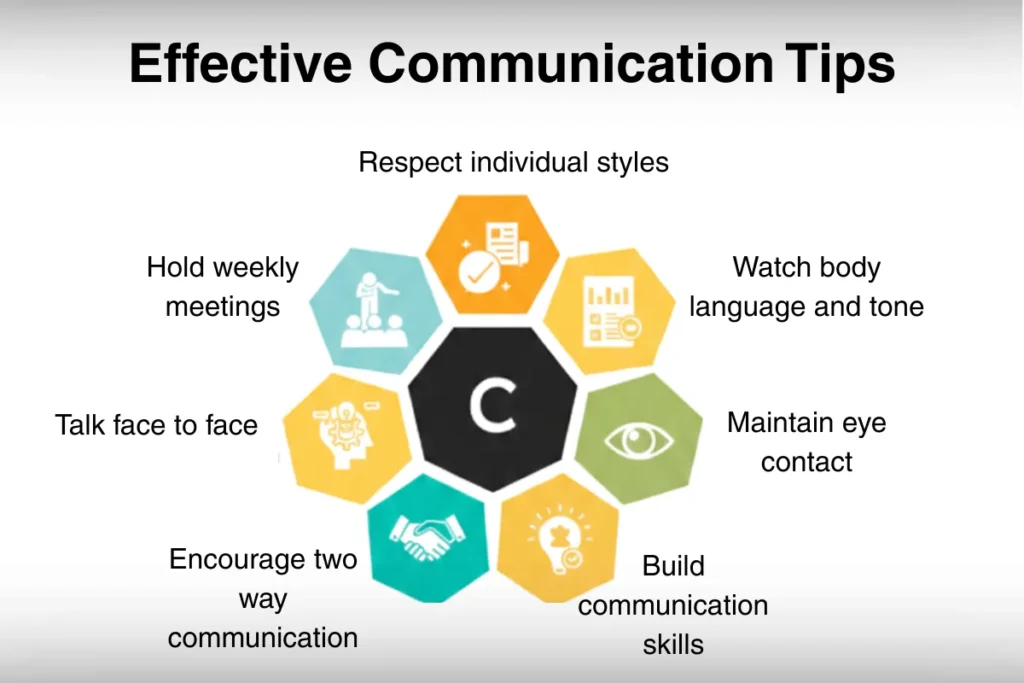
Practice Active Listening Daily
Avoid multitasking during conversations.
Maintain eye contact.
Ask follow-up questions.
Show genuine interest.
Encourage Feedback
Employees should feel safe sharing:
- Ideas
- Concerns
- Suggestions
- Criticism
Anonymous surveys, regular one-on-one meetings, and open-door policies encourage honest communication.
Develop Empathy
Understanding employee perspectives improves communication dramatically.
Empathy helps leaders deliver:
- Better feedback
- Fair decisions
- Stronger motivation
Lead by Example
Employees observe leadership behavior.
If leaders communicate respectfully, transparently, and professionally, employees naturally follow similar standards.
Stay Accessible
Approachable leaders create stronger workplace relationships.
Availability encourages employees to seek clarification before problems become larger.
Improve Public Speaking
Leaders frequently:
- Present strategies
- Conduct meetings
- Address employees
- Speak at conferences
Public speaking training strengthens leadership presence.
Use Technology Wisely
Communication tools such as Microsoft Teams, Slack, Zoom, Google Meet, and AI-powered collaboration platforms improve productivity when used effectively.
Technology should enhance—not replace—human interaction.
Common Communication Mistakes Leaders Should Avoid
Even experienced leaders make communication errors.
These include:
- Assuming employees understand instructions
- Ignoring employee feedback
- Delaying difficult conversations
- Providing vague expectations
- Overloading employees with unnecessary information
- Failing to recognize achievements
- Speaking more than listening
Avoiding these mistakes significantly improves leadership effectiveness.
The Future of Leadership Communication
Communication will continue evolving alongside technology.
Future leaders must balance:
- Human empathy
- AI assistance
- Digital collaboration
- Data-driven decision-making
Video communication, AI-generated meeting summaries, multilingual translation tools, virtual reality collaboration, and predictive communication analytics are already reshaping workplace interactions.
However, despite technological advances, one truth remains unchanged:
People follow leaders they trust.
Trust grows through consistent, respectful, and meaningful communication.
Final Thoughts
Communication is no longer just another leadership skill—it is the foundation upon which every successful leader builds influence, trust, and organizational success.
In 2026, effective leaders are not those who simply give instructions; they are those who inspire conversations, encourage collaboration, resolve conflicts, communicate vision, and create environments where every employee feels heard and valued.
Organizations that invest in leadership communication experience stronger cultures, higher employee engagement, increased innovation, and better business performance. Likewise, individuals who continuously develop their communication abilities position themselves as influential leaders capable of guiding teams through change and uncertainty.
Whether you are a first-time manager, an experienced executive, an entrepreneur, or an aspiring leader, improving your communication skills is one of the most valuable investments you can make. The ability to listen with empathy, speak with clarity, provide constructive feedback, and inspire confidence will continue to define exceptional leadership for years to come.
