
By Koylanchal Tourism Desk
When conversations turn to India’s great heritage destinations, names like Hampi, Khajuraho, Konark, Varanasi, Mahabalipuram, and Jaipur dominate travel itineraries. Every year, millions of tourists flock to these iconic sites to witness India’s glorious architectural and cultural legacy.
Yet, tucked away in the quiet countryside of Dumka district in Jharkhand, close to the West Bengal border, lies one of India’s most extraordinary yet least-known historical treasures—a village where rulers chose spirituality over luxury, devotion over grandeur, and temples over royal palaces.
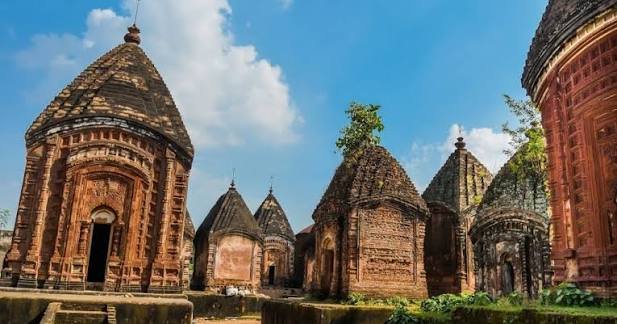
Welcome to Maluti, a heritage village often referred to as “Gupta Kashi” (Hidden Varanasi), once home to an astonishing 108 terracotta temples. Today, nearly 72 temples still stand, preserving more than five centuries of history, faith, architecture, and artistic brilliance.
Despite its immense historical value, Maluti remains largely absent from mainstream tourism. For history lovers, photographers, architecture enthusiasts, and spiritual travelers, it represents one of India’s greatest hidden gems waiting to be discovered.
A Village Unlike Any Other in India
Most kingdoms across medieval India showcased their wealth through magnificent forts, lavish palaces, towering gateways, and royal gardens.
Maluti tells an entirely different story.
Instead of constructing luxurious residences, its rulers dedicated their wealth to building temples.
Over generations, these temples transformed a modest village into one of eastern India’s most remarkable religious landscapes.
Walking through Maluti today feels like stepping back several centuries. Narrow village lanes wind past clusters of ancient shrines, each decorated with intricate terracotta carvings that continue to narrate stories from Indian mythology despite centuries of weathering.
The peaceful atmosphere makes Maluti feel untouched by modern commercial tourism—a rare experience in contemporary India.
The Fascinating Legend Behind Maluti
The origins of Maluti date back to the late 15th century during the rule of Sultan Alauddin Husain Shah of Bengal.
According to local legends and historical accounts, a poor Brahmin named Basanta Roy once found the Sultan’s prized hawk, which had flown away during a hunting expedition.
Rather than keeping the valuable bird or seeking personal gain, Basanta Roy honestly returned it to the Sultan.
Deeply impressed by his honesty, loyalty, and integrity, Sultan Husain Shah rewarded him with a tax-free estate known as Nankar Raj.
This land later became the foundation of the Kingdom of Maluti.
Unlike many contemporary rulers who built magnificent forts and extravagant palaces to display political power, Basanta Roy’s descendants followed a remarkably different path.
They became devoted followers of Hindu traditions and gradually transformed their kingdom into a centre of religious architecture.
Why Were 108 Temples Built?
One question naturally arises:
Why exactly 108 temples?
The answer lies in both religion and family tradition.
The royal family eventually expanded into several branches across generations.
Instead of competing through warfare or displays of wealth, each branch expressed its devotion by constructing temples dedicated to different Hindu deities.
This unique form of friendly spiritual competition continued for centuries.
Eventually, the village contained 108 temples, a number deeply sacred in Hinduism.
The number 108 represents spiritual completeness and appears throughout Hindu philosophy:
- 108 Upanishads
- 108 names of Lord Shiva
- 108 names of Goddess Durga
- 108 beads in a prayer mala
- 108 sacred energy points in yogic traditions
Thus, the number itself reflected religious symbolism rather than coincidence.
Terracotta Art That Rivals India’s Finest
The true magic of Maluti lies not only in the number of temples but also in their extraordinary craftsmanship.
Each temple serves as an open-air gallery showcasing medieval Bengal-style terracotta architecture.
Unlike marble monuments or sandstone forts, Maluti’s temples are built primarily from baked bricks decorated with beautifully carved terracotta panels.
These panels depict:
- Episodes from the Ramayana
- Scenes from the Mahabharata
- Stories from the Puranas
- Lord Shiva in various forms
- Goddess Kali and Durga
- Lord Vishnu and his avatars
- Krishna Leela
- Royal processions
- Musicians and dancers
- Village life
- Animals and birds
- Floral patterns
- Mythological creatures
Every inch of these temples reflects painstaking craftsmanship.
Many historians compare Maluti’s artistic excellence to the famous Bishnupur Terracotta Temples in West Bengal.
Historical evidence suggests that artisans from Bengal played a major role in designing Maluti’s temple architecture, creating a remarkable blend of Bengal and local traditions.
Interesting Reads
Tourism in Jharkhand
Future of Koylanchal 2030: Major Projects, Budgets, Jobs, Education & Infrastructure Development
A Living Museum of Medieval India
Unlike many archaeological monuments that have become isolated tourist attractions, Maluti remains a living village.
The temples are not abandoned ruins.
They continue to be places of worship for local residents.
Children play near centuries-old shrines.
Villagers celebrate festivals within temple courtyards.
Daily prayers continue in many restored temples.
This unique coexistence of heritage and everyday rural life gives visitors an authentic cultural experience rarely found elsewhere.
Rather than observing history behind protective barriers, visitors witness history woven naturally into daily life.
The Sacred Mauliksha Temple
Among all the temples in Maluti, one occupies a special spiritual position—the Mauliksha Temple.
Dedicated to Goddess Mauliksha, the temple serves as the spiritual heart of the village.
She was regarded as the royal family’s guardian deity, and generations of rulers offered prayers before undertaking important decisions.
The origins of Goddess Mauliksha remain surrounded by mystery.
Local traditions connect her with Goddess Tara of Tarapith, one of eastern India’s most significant Shakti Peeths.
Many devotees believe Mauliksha represents the elder divine sister of Goddess Tara.
This spiritual connection attracts pilgrims from both Jharkhand and West Bengal throughout the year.
During festivals, especially Kali Puja, Durga Puja, and regional religious celebrations, the temple complex becomes vibrant with rituals, devotional songs, and community gatherings.
Maluti’s Remarkable Architectural Diversity
Although collectively known as the Maluti Temple Complex, the temples are not identical.
Architects identify several distinct styles:
Chala Temples
Inspired by Bengal’s traditional thatched-roof houses.
Rekha Deul Style
Featuring tall curvilinear towers common in eastern India.
Char-Chala Temples
Four-sloped roof structures reflecting regional architectural traditions.
Flat-Roof Shrines
Simpler temple forms used for smaller shrines.
Despite varying designs, nearly every temple displays intricate terracotta artwork that tells stories without words.
A Heritage Site the World Nearly Lost
Perhaps the most surprising chapter in Maluti’s story is how close it came to disappearing forever.
For decades, lack of conservation, natural weathering, vegetation growth, water damage, and neglect threatened the survival of many temples.
Several structures collapsed completely.
Others developed dangerous cracks.
Recognising the seriousness of the situation, the Global Heritage Fund included Maluti among the world’s endangered cultural heritage sites.
At one point, it was the only Indian heritage site featured on the organisation’s list of vanishing monuments.
This international recognition brought attention to the urgent need for conservation.
Without intervention, historians feared that one of India’s greatest temple complexes might disappear forever.
Government Conservation Efforts
Recognising Maluti’s cultural importance, the Government of Jharkhand launched several restoration initiatives.
Conservation work has included:
- Structural repairs of damaged temples
- Restoration of terracotta artwork
- Scientific conservation methods
- Protection from water damage
- Preservation of original architectural features
Beyond temple restoration, broader village development projects have also been undertaken.
These include:
- Improved drinking water supply
- Better sanitation facilities
- Rural electrification
- Tourist information centres
- Rainwater harvesting systems
- Healthcare support
- Primary education infrastructure
- Employment generation programmes
- Terracotta craft training
- Heritage awareness campaigns
These initiatives aim not only to preserve monuments but also to improve the quality of life for local communities.
Why Maluti Matters to Indian History
Maluti offers historians valuable insights into medieval eastern India.
It demonstrates:
- The influence of Bengal architecture in present-day Jharkhand.
- Religious patronage by regional kingdoms.
- Evolution of terracotta craftsmanship.
- Rural temple-building traditions.
- Cultural exchange across political boundaries.
Unlike imperial capitals, Maluti represents how smaller kingdoms contributed significantly to India’s architectural heritage.
It reminds us that history was not written only in grand empires but also in small villages driven by faith and artistic excellence.
Tourism Potential Waiting to Be Realised
Despite its extraordinary heritage, Maluti remains one of India’s least-visited historical destinations.
Its tourism potential is enormous.
Visitors can experience:
- Ancient temple architecture
- Heritage photography
- Spiritual tourism
- Rural cultural experiences
- Traditional festivals
- Terracotta craftsmanship
- Historical storytelling
- Peaceful countryside landscapes
Unlike crowded tourist hubs, Maluti offers tranquility and authenticity.
There are no long queues, heavy commercialization, or overwhelming tourist crowds.
Instead, visitors encounter quiet temple courtyards, welcoming villagers, and a timeless atmosphere.
Best Time to Visit Maluti
The ideal months to explore Maluti are between October and March, when the weather is pleasant.
Festival periods provide an especially enriching experience.
Popular occasions include:
- Kali Puja
- Durga Puja
- Diwali
- Makar Sankranti
- Local temple fairs
During these celebrations, religious rituals, cultural performances, and traditional village customs create an unforgettable atmosphere.
How to Reach Maluti
Maluti is located in Shikaripara Block of Dumka district, Jharkhand, close to the West Bengal border.
Visitors can reach the village through:
- By Road: Connected to Dumka and Rampurhat via state highways.
- Nearest Railway Station: Rampurhat (West Bengal), approximately 20 km away.
- Nearest Airport: Deoghar Airport, with road connectivity to Dumka and Maluti.
Many travelers combine Maluti with visits to Tarapith, Deoghar, and nearby heritage destinations.
Challenges That Still Remain
While restoration has made significant progress, Maluti continues to face several challenges.
These include:
- Limited tourism infrastructure
- Lack of widespread national awareness
- Need for better interpretation centres
- Preservation of fragile terracotta artwork
- Sustainable tourism planning
- Local employment linked to heritage tourism
Experts believe responsible tourism can play a major role in ensuring long-term preservation.
Greater visitor awareness would encourage continued investment in conservation while supporting local livelihoods.
Why Every Indian Should Know About Maluti
India’s heritage extends far beyond its globally famous monuments.
Places like Maluti reveal lesser-known chapters of Indian civilisation—stories of devotion, artistic excellence, rural kingdoms, and community identity.
Its temples remind us that greatness is not always measured by massive forts or royal palaces.
Sometimes, the most enduring legacy is built through faith, creativity, and cultural preservation.
As India increasingly promotes heritage tourism, Maluti deserves recognition alongside the country’s greatest historical destinations.
For travelers seeking authentic experiences, historians searching for hidden narratives, photographers chasing timeless beauty, and pilgrims looking for spiritual serenity, Maluti offers something truly exceptional.
It is not merely a forgotten village in Jharkhand.
It is a living museum, a sacred landscape, and one of India’s most extraordinary yet overlooked heritage treasures—waiting patiently for the world to rediscover it.
